While much of North America is covered in snow, those lucky enough to be in the Rio Grande Valley of Texas are enjoying warm, subtropical weather. The old saying is that everything in Texas is big and that includes its list of birds.
This region hosts many species that can be encountered nowhere else in North America, such as Green Jay, Buff-bellied Hummingbird, White-tipped Dove, Groove-billed Ani, Hook-billed Kite, White-tailed Hawk, Olive Sparrow, Golden-fronted Woodpecker and Altimira Oriole to name just a few. We will begin with a morning in Jones State Forest N. of Houston where Red-cockaded Woodpeckers and Brown-headed Nuthatches are resident. We’ll board The Skimmer, a comfortable 40 ft vessel that will get us up close and personal with Whooping Cranes at Aransas National Wildlife Refuge. In addition to the cranes we’ll see a plethora of herons, egrets, waterfowl and other interesting marsh birds. We’ll then visit the San Miguelito Ranch near Raymondville where Ferruginous Pygmy-Owls can be seen.
Our travels will take us to some of the most legendary birding hot-spots in the United States. At Santa Ana National Wildlife Refuge we'll enjoy, or cringe, at the raucous calls of the Plain Chachalacas. At Bentson-Rio Grande State Park we'll watch for Clay-colored Thrush, Eastern Screech-Owl and an array of possible Mexican strays. Continuing west along the river we'll stop at Falcon Dam, famous for Muscovy Duck, Red-billed Pigeon and Ringed and Green kingfishers.
If you enjoy exciting birding, at a relaxed pace, this trip will suit you.
Day 1 – Saturday, Feb 14 – Tour begins in Houston. This morning we’ll take a trip N. to Jones State Forest, a preserved area of Longleaf and Loblolly pine where a few special birds reside. Highlights here include rare Red-cockaded Woodpeckers and Brown-headed Nuthatch in addition to Red-headed, Red-bellied and Pileated woodpeckers, Tufted Titmouse and much more can be found. After lunch we’ll start the journey to Rockport where we will spend the night.
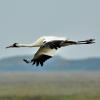
Day 2 – Sunday, Feb 15 – This morning we will bird at the famous Aransas National Wildlife Refuge. We’ll take a ride on ‘The Skimmer’ and explore the back bays and estuaries of Aransas where Whooping Cranes can be found. Though efforts to save the species have been successful, these beautiful birds are still teetering on the edge of extinction. Nearly the entire world population of Whooping Cranes spends the winter at Aransas! We will also find many ducks, geese, herons, egrets and shorebirds as well as wintering sparrows on the refuge. After our boat tour of Aransas has concluded we’ll carry on S. towards Kingsville, stopping at Tule Lake for shorebirds and waterfowl enroute. Night in Raymondville.
Day 3 – Monday, Feb 16 – This morning will be spent at the beautiful San Miguelito Ranch where we hope to find one of North America’s rarest owls, the tiny Ferruginous Pygmy-Owl. Of course as we explore the property we’ll find all sorts of other interesting birds like colorful Green Jays, noisy Great Kiskadees and skulking Olive Sparrows. Later on we’ll carry on towards Harlingen in the Rio Grande Valley and if time permits we’ll visit the Hugh Ramsey Nature Park along the banks of the Arroyo Colorado River we’ll search for Plain Chachalaca, White-tipped Dove, Long-billed Thrasher and Altimira Orioles. Night in Harlingen.
Day 4 – Tuesday, Feb 17 - Laguna Atascosa National Wildlife Refuge is a large refuge encompassing many different habitats from beaches to lakes and ponds and scrub-forests to desert plains. Bird life is varied and abundant here. Feeders at the park headquarters will have Green Jay, Black-crested Titmouse, and Golden-fronted Woodpeckers. Other Rio Grande specialties we will look for at the refuge include Long-billed Thrasher, Plain Chachalaca and Olive Sparrow. Large numbers of ducks and geese can be found on the lakes at Laguna Atascosa. We should see Snow, Ross’s, Greater White-fronted and Canada geese, Sandhill Cranes, American White Pelicans and huge numbers (80 % of the North American population) of Redheads, as well as other ducks. We’ll return to Harlingen via South Padre Island for shorebirds, rails, terns and gulls. Species such as Reddish Egret, Wilson’s Plover Black Skimmer and potential Clapper, King, Virginia, Sora and with a lot of luck Black or Yellow rails are possible on the Lagana Madre Nature Trail. Night in Harlingen.
Day 5 – Wednesday, Feb 18 – Sabal Palms Sanctuary with its majestic towering palms and jungle-like habitat, is one of the best birding locations in North America. We’ll wander trails and linger around feeders at the visitor’s centre hoping to find such gems as Groove-billed Ani, Buff-bellied Hummingbird, Green Jay, Tropical Parula (rare), and Hooded Oriole to name a few. A nice selection of wintering warblers are also possible at Sabal Palm, including Orange-crowned, Nashville, Black-throated Gray and Black-throated Green warblers and even possibly Tropical Parula. Ringed and Green kingfishers are often seen at Sabal Palm Sanctuary. Sabal Palm is one of the best places for Mexican vagrants in Texas. Possibilities include Gray-crowned Yellowthroat and Clay-colored Robin.
This afternoon we’ll try to find some urban birds around Brownsville, including rare Tamaulipas Crow and introduced Green Parakeets and Red-crowned Parrots. Night in Harlingen.
Day 6 – Thursday, Feb 19 – Today we’ll visit two sanctuaries in the town of Weslaco. Estero Llano Grande State Park and the Frontera Audubon Sanctuary are both fantastic birding sites. Sub-tropical vegetation and feeders at both places attract a wide array of resident and wintering Rio Grande birds. Rarities possible include Rose-throated Becard, Crimson-collared Grosbeak and Blue Bunting. Night in McAllen.
Day 7 – Friday, Feb 20 –The Santa Ana National Wildlife Refuge is one of the North Americas most productive birding sites. Miles of trails through thornscrub woods, open fields and ponds and marshes attract the majority of birds possible in Southern Texas. Stunning Altimira Orioles, the males brilliant orange, make huge nests of moss in taller trees. Green Jays, decked out in an unbelievable patter of green, black, yellow and blue visit feeders near headquarters as do peculiar Plain Chachalacas and many other birds. Ponds should have ducks and shorebirds. Hook-billed Kites, a rare resident of the woods in the Rio Grande, are seen here quite often. They feed almost exclusively on snails found in trees. With luck we’ll find the elusive Clay-colored Thrush, a close Central American relative of the American Robin.
Later on we’ll visit Anzalduous County Park where we’ll scan grassy fields for wintering Sprague’s Pipits and both Eastern and Western meadowlarks. As we work our way through the park we should pick up Golden-fronted Woodpeckers, Inca Doves, Black-crested Titmouse, Vermilion Flycatcher and maybe both Ringed and Green kingfishers.
This evening we’ll make an optional visit to Bentson-Rio Grande State Park where we will search for Eastern Screech-Owl and Common Pauraque. Night in McAllen.
Day 8 – Saturday, Feb 21 – Today’s birding adventure will begin at Bentsen-Rio Grande State Park where amongst the local specialties we’ll hunt down wintering flocks which may have Blue-headed Vireo, Ruby-crowned Kinglet, Blue-gray Gnatcatcher, Hermit Thrush and an assortment of warblers. Possibilities of Mexican vagrants here at Bentsen include Clay-colored Thrush, Blue Bunting amongst others. A male Allen’s Hummingbird has been frequenting feeders here this winter. Bentsen is often considered the best birding spot in winter in the Rio Grande Valley.
We’ll then head W. towards Salineno and Chapeno where campers feed birds. Scaled Quail, Greater Roadrunner, Verdin, Audubon’s Oriole, Ladder-backed Woodpecker, Long-billed and Curve-billed thrashers, Olive Sparrows and Northern Cardinals should be present. At Chapeno, where the only ‘reliable’ Brown Jays in North America can be found, we’ll spend an hour or so. For a quick taste of “western” birding, we will visit Falcon State Park. Here, in the thorn-scrub habitat, we should find Pyrrhuloxia, Curve-billed Thrasher, Cactus Wren, numerous sparrows and Northern Bobwhite. Night in Rio Grande City.
Day 9 – Sunday, Feb 22 –This morning we’ll search for the rare White-collared Seedeater in the scrubby habitat behind the library in Zapata. Once we find the bird we’ll begin our return trip to Houston where tour concludes.
![]()
to us with any questions or comments about this website.
Copyright © Avocet Tours 2002-2009. All Rights Reserved.
Website development by Cool New Media