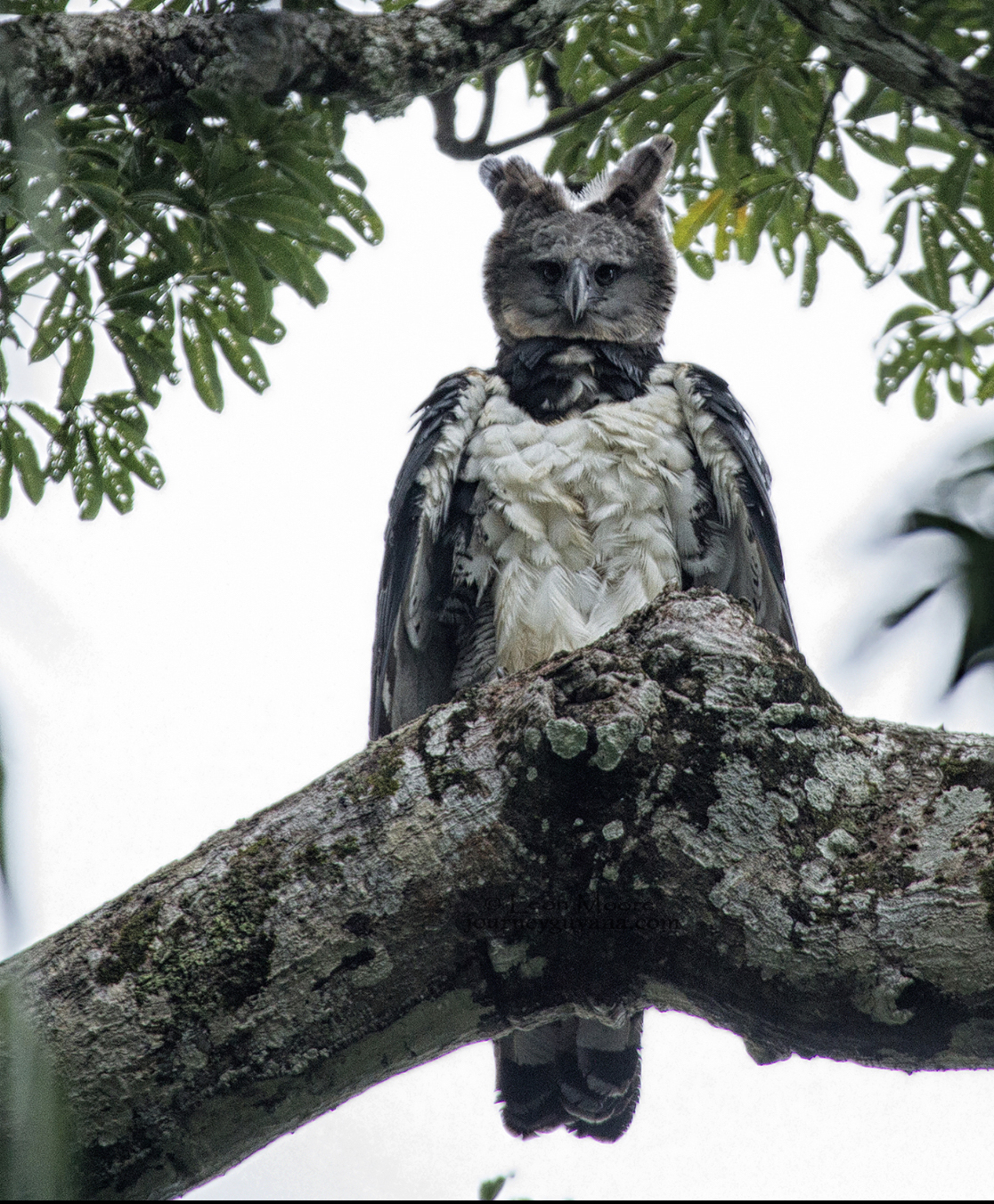
Day 1 - Our tour will begin from the Cheddi Jagan International Airport where the tour leader and driver will be waiting at the airport to transfer you to your hotel in Georgetown. The drive into Georgetown can vary depending on traffic, taking between 45 minutes to 1.5 hours.
Georgetown is located in the north of Guyana on the Atlantic coast, and about a one-third of the Country’s population lives in this English speaking metropolis. After arriving at your hotel, if there is time today, we will visit the Botanical Garden. Otherwise, we will do this the next day.
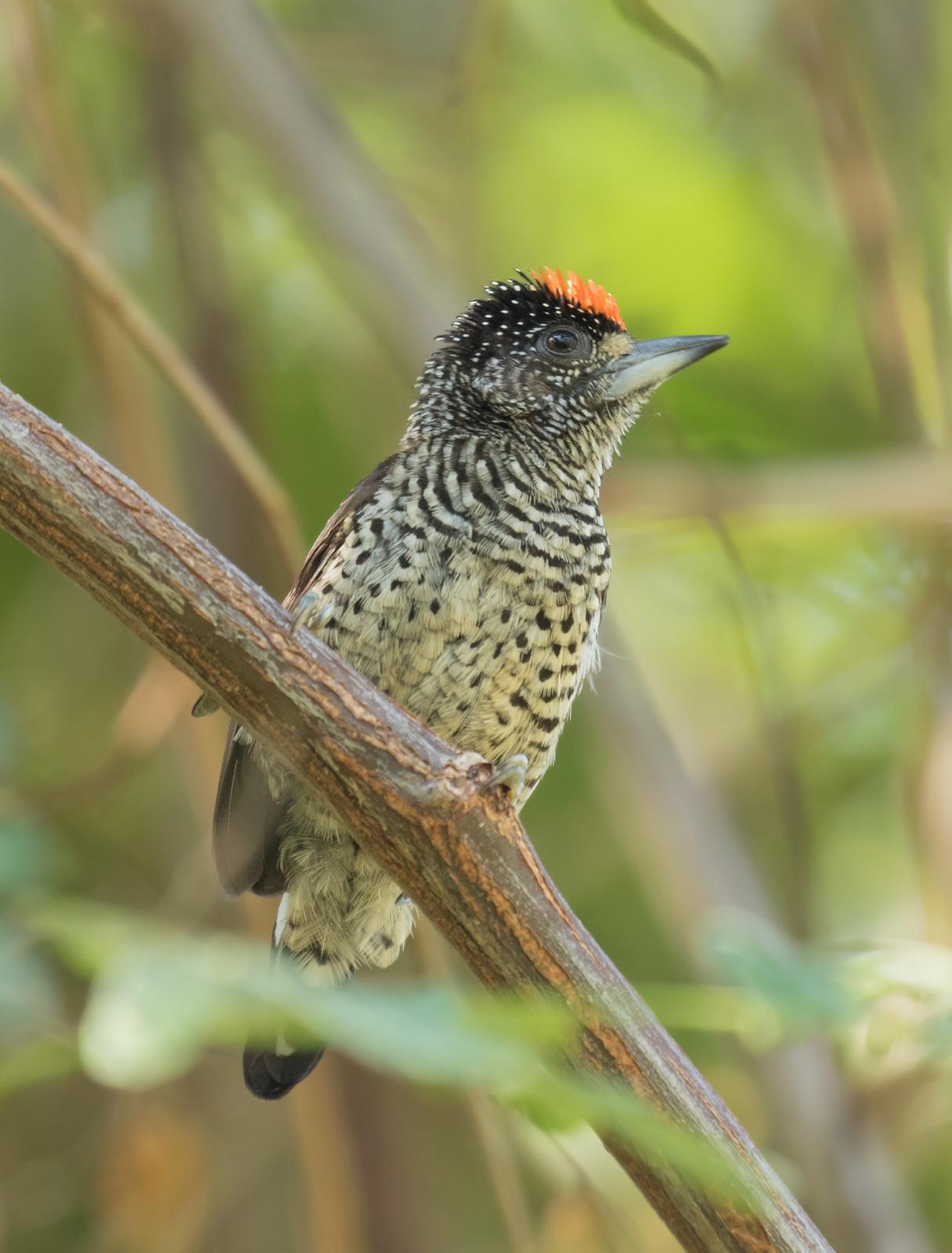
The Georgetown Botanical Garden offers large tropical trees, lawns and wetlands providing for some exciting birding. Some of the species we are likely to see include Great Black-Hawk, Common Black-Hawk, Zone-tailed Hawk, Snail Kite, Green-rumped Parrotlet, good numbers of Orange-winged and Yellow-crowned amazons and this is the only place to see our first target; the Festive Parrot. White-bellied Piculet, Wing-barred Seedeater, Wattled Jacana, White-throated Toucan, Pied Water-Tyrant, Red-shouldered Macaw, Yellow-chinned Spinetail, and a number of other amazing birds are possible. Overnight in Georgetown.
Day 2 - We will get an early start to drive about 1-1.5hrs east of the city to the Mahaica River. This is where we will have the only chance on this tour of seeing and photographing Guyana’s national bird, the Hoatzin. Other target birds here will include; Long-winged Harrier, Blood-coloured Woodpecker, White-bellied Piculet, Wing-barred Seedeater and various other water birds. Other species we often see in the area includes Yellow-chinned Spinetail, Black-crested Antshrike, Little and Striped cuckoos, a variety of kingfishers, Black-collared Hawk, Black Hawk-Eagle and many other amazing birds. This area is also one of the best places to see and photograph the Guianan Red Howler Monkey.
After our time on the Mahaica river, on the way back to Georgetown, we will stop at some mangrove forest for a chance to possibly see and photograph other localized species, such as Mangrove Rail, Mangrove Cuckoo and the Rufous Crab-Hawk! Scarlet Ibis is also regular here and with reasonable luck, we hope to get some stunning views of this species.
After lunch at the hotel and a little siesta, we will spend a couple hours birding the Botanical Garden, a short drive from the Hotel. Night in Georgetown.
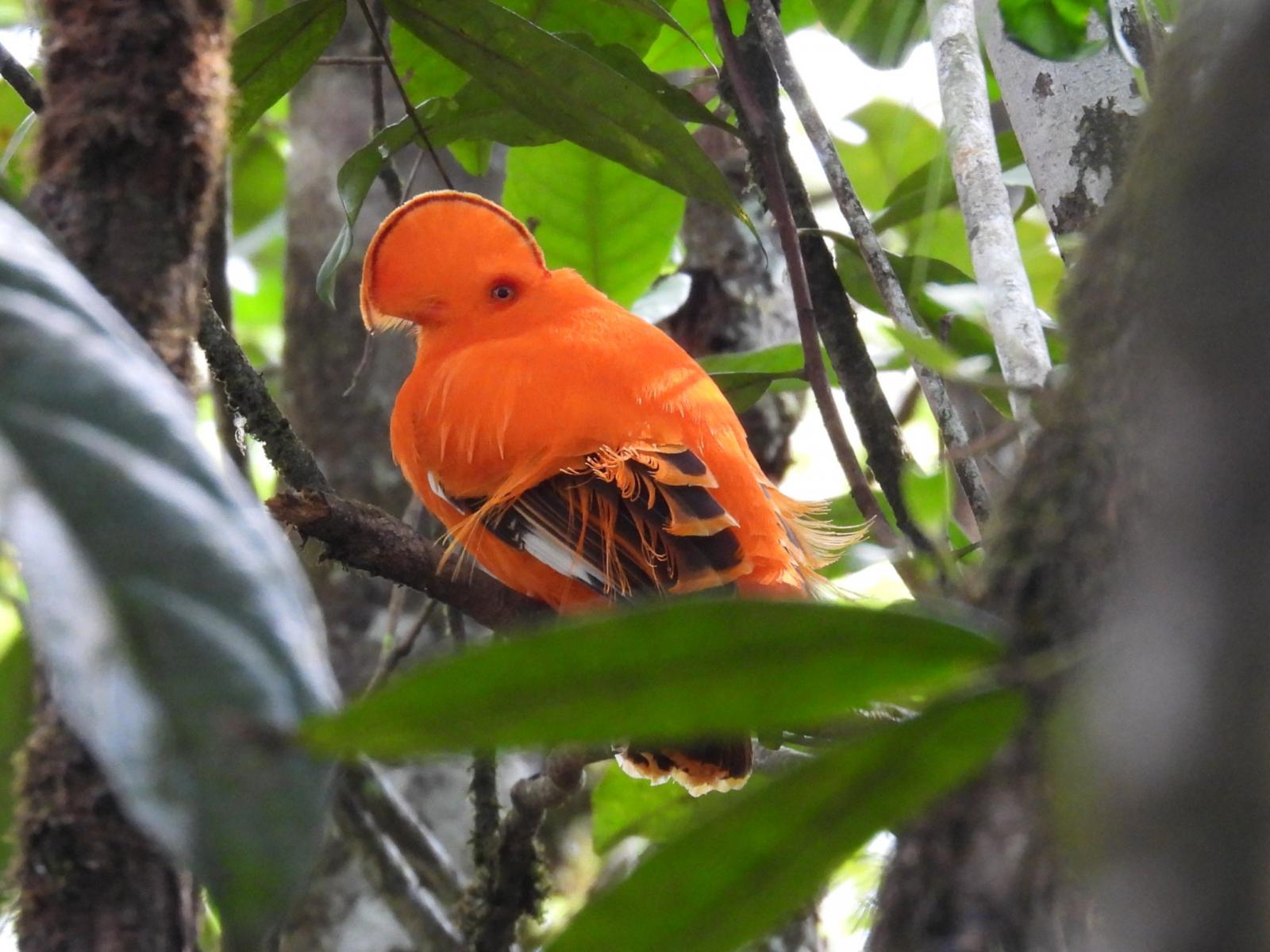
Day 3 - After breakfast at our hotel, we will transfer to the nearby Ogle Airport to connect with our private charter flight to Iwokrama River Lodge. First though, we will make a stop at the world-famous Kaieteur Falls! The majesty of this site will be enjoyed both from the air, as the plane makes a swing around the falls upon landing, and from a viewpoint about 10-minute walk from the little airport on site. There is a wonderful lek of the gaudy Guianan Cock-of-the-Rock here that we will enjoy to our hearts content. Around the falls themselves are a few species of swifts, Cliff Flycatcher and Orange-breasted Falcon, the latter of which is a highly sought-after bird. With any luck it can typically be found here. With luck, and if time, we will also look for the rare Roraiman Antbird. Our plane will then take us to the Amerindian village of Fair View, a 5-minute drive from the Iwokrama River Lodge.
The Iwokrama Rainforest, a vast wilderness of one million acres, is a protected area that was established in 1996 as the Iwokrama International Centre for Rainforest Conservation and Development. The Iwokrama Forest is in the heart of one of the last untouched tropical forests of the world – The Guiana Shield of North-Eastern South America. Iwokrama is exceptional among conservation organizations because it joins with local people in every aspect of its work. From research to business, Iwokrama ensures local economic and social benefits from forest use and conservation.
Upon our arrival at the river lodge, we will receive a welcome by the staff and then settle in to our rooms. After lunch, depending on the time, we will either head out on the bushmaster trail or along the main Iwokrama road. The trail will be good to target the Capuchinbirds at a lek plus birds like Spotted Antpitta, Rufous-bellied Antwren, Ferruginous-backed Antbird, Guianan-warbling Antbird and Rose-breasted Chat. If it is not too late, we may run into a forest flock where we can pick up birds like the Brown-bellied Stipplethroat, Chestnut-rumped Woodpecker, Red-billed Woodcreeper, Plain-browned Woodcreeper, Waved Woodpecker, Collared Puffbird, and the elusive Rufous-winged Ground Cuckoo. If we are lucky enough with an army ant-warm, we stand a good chance of seeing White-plumed, Rufous-throated and Wing-banded Antbird. At sunset, we will then head out along the main road to do a little owling and we may encounter night birds like (Northern) Tawny-bellied Screech-Owl, Spectacled Owl, Great Potoo and more. We may get lucky with Crested Owl as well.
Overnight at Iwokrama River Lodge.
Day 4 - We will start the day after an early breakfast. A trip to Iwokrama is not complete without a hike/birding to the top of Turtle Mountain. We will take a boat journey downriver approximately one hour (with birding stops) and then enjoy a slow walk for the rest of the morning along the Turtle Mountain trail. Numerous bird species can be spotted on the lower section of the trail including the Red-and-Black Grosbeak, Yellow-billed Jacamar, Brown-bellied Antwren, Ferruginous-backed Antbird, Guianan-Red Cotinga, Blue-cheeked Parrot, Pygmy Antwren, Guianan Tyrannulet, Guianan Streaked Antwren, Tiny-tyrant Manakin, Long-tailed Potoo on a day roost (if lucky), Guianan Toucanet, Guianan Puffbird, Green Aracari, Rufous-bellied Antwren, Yellow-green Grosbeak, Amazonian Antshrike, Amazonian Grosbeak and many other birds.
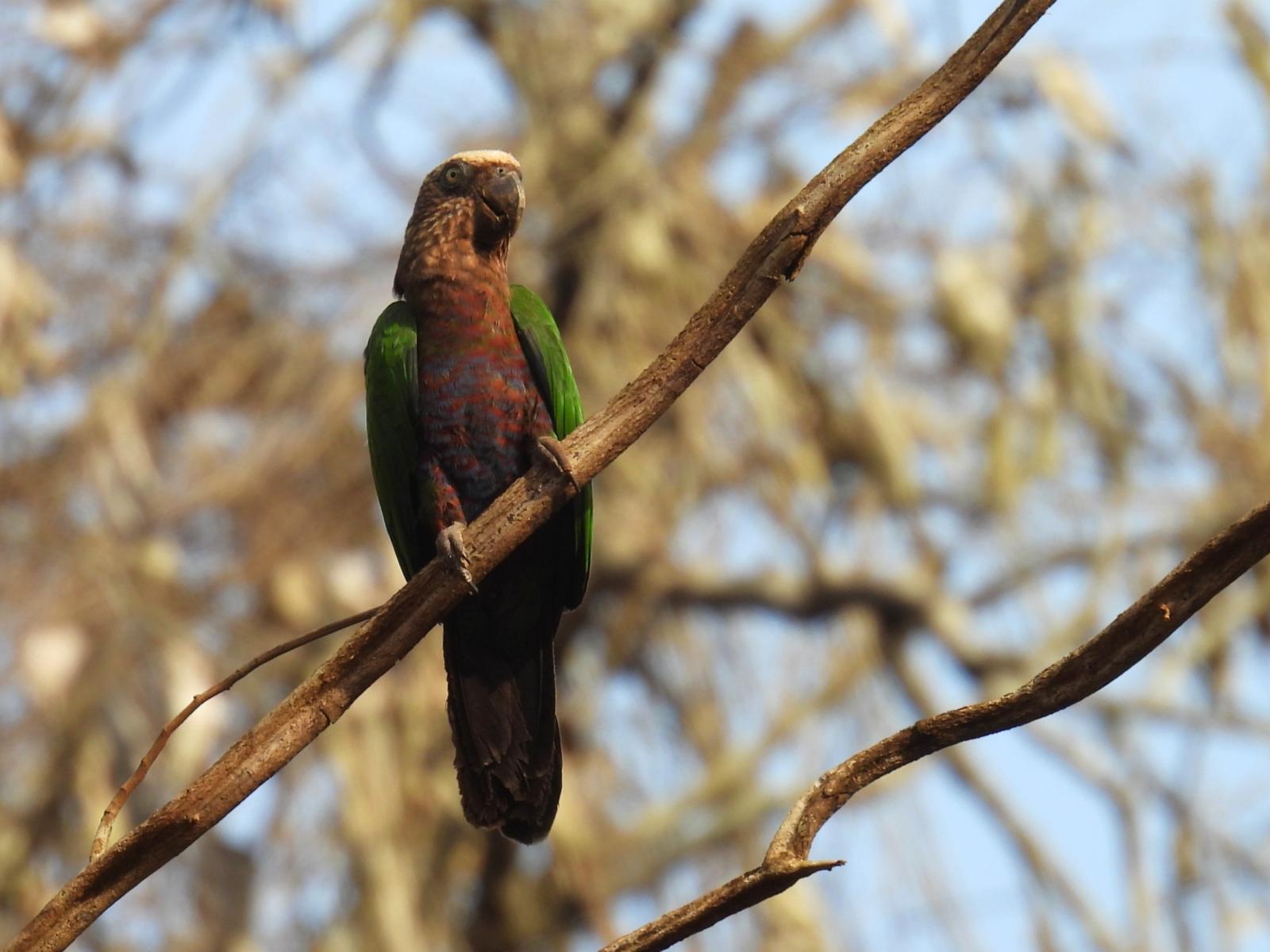
The boat ride is productive for birds and we may encounter Sunbittern, Green Ibis, roosting Ladder-tailed Nightjar, Black-collared Swallow and Red-fan Parrot to name but a few.
After lunch back at the lodge we will have the chance in the afternoon to further explore the forest trails around the lodge including another visit to the Capuchinbird lek if we failed to connect with one the day before.
Overnight at Iwokrama River Lodge.
Day 5 - After breakfast, we will begin our transfer to Atta Lodge and Canopy Walkway making various birding stops along the way. The first stop may be along the entrance road to Iwokrama Lodge where a certain tree, if flowering, can produce the lovely Crimson Topaz.
En route to Atta Lodge we will stop at some Mori Scrub/white sand forest. Mori Scrub is a unique white sand forest that hosts some key bird species such as Red-legged Tinamou, Red-shouldered Tanager, Bronzy Jacamar, Spotted Puffbird, Rufous-crowned Elaenia, Pelzen’s Pygmy-Tyrant, Black Manakin, and Guianan Schiffornis. This area is very flat so the hike will be easy.
We will be keeping an eye out for mixed flocks, with the bulky Blue-backed Tanager our primary goal. The drive can be good for parrots as well with Caiaca Parrot, Dusky Parrot and several other species possible. We will be sure to have our cameras and binoculars ready because occasionally Jaguars and other mammals are seen while driving through the rainforest!
We then continue to Atta Lodge located within the one million acres of protected rain forest of Iwokrama. After settling in, we will take an afternoon walk round the lodge trails or bird back out on the main road.
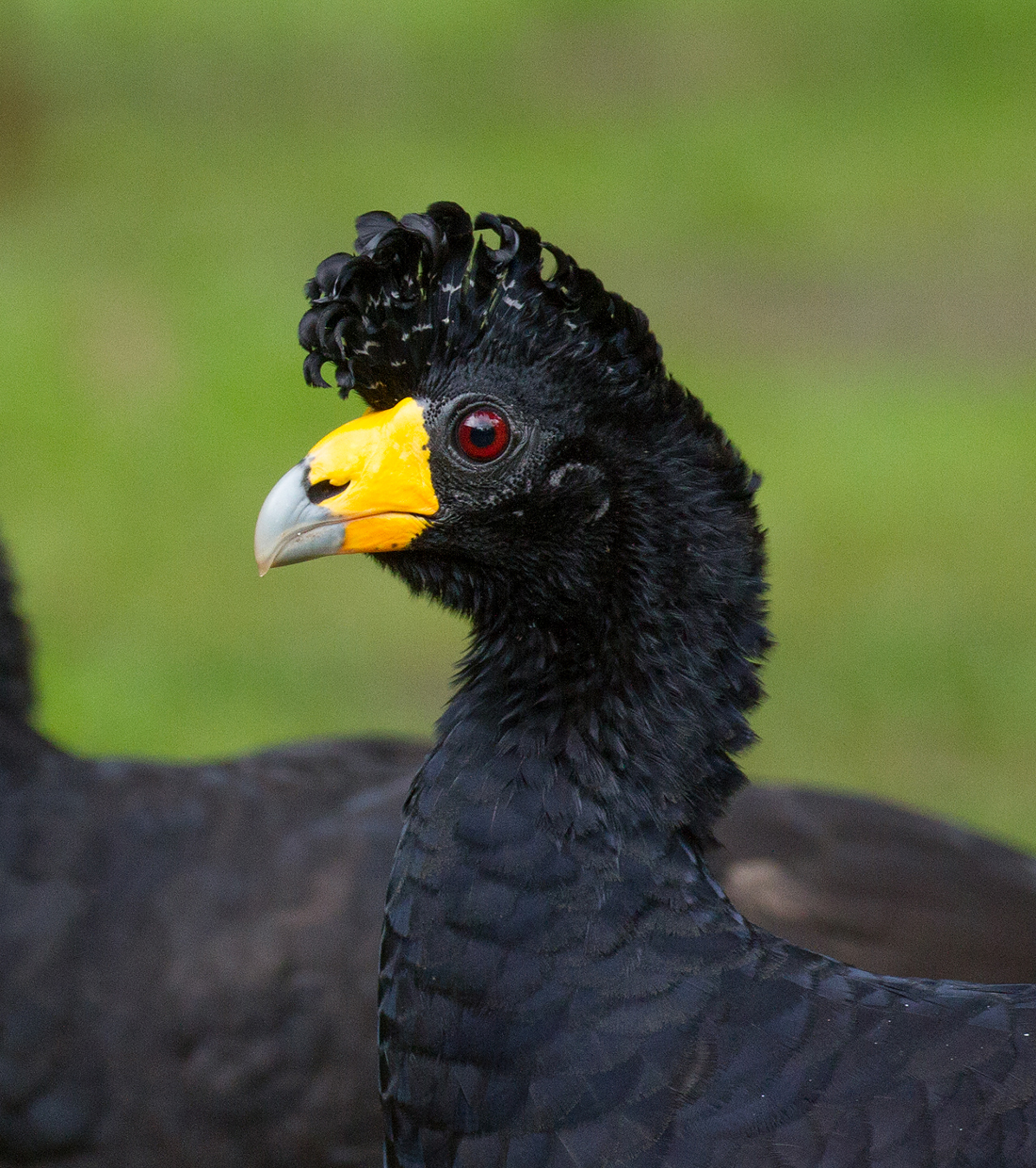
Another area where we will spend some time inn the coming days is the clearing around the lodge, as this is one of the best places to see the Crimson Fruitcrow and Black Curassow.
Overnight at Atta Lodge.
Day 6 - This morning we will head out to the canopy walkway at first light, birding as we go of course. The lodge is situated approximately 750 meters from the canopy walkway with a small climb up a hill required in the last couple hundred metres. The short walkway ends at a platform with views out over the subcanopy and further canopy of the flat lands below. This vantage can allow for get great looks at a range of canopy species. Among the likely highlights are Painted and Golden-winged parakeets, Caica Parrot, Guianan Puffbird, Waved and Golden-collared woodpeckers, and Spot-tailed, Todd’s and Ash-winged antwrens. The walkway is also an excellent place to look for various species of cotinga including the Dusky Purpletuft as well as Pompadour and Purple-breasted Cotingas.
Within the forest that surrounds the lodge we can look for Black-faced Hawk, Spotted Antpitta, Red-and-Black Grosbeak, Grey-winged Trumpeter, Cayenne Jay, Red-billed Woodcreeper, Painted Tody-Flycatcher, Rufous-throated and Ferruginous-backed antbirds, White-crested Spadebill and Chestnut and Red-necked woodpeckers.
After lunch, we will spend the afternoon birding on the main road through the Iwokrama Forest and also visit another nearby white sand forest to target the scarce Pelzeln’s Tody-Tyrant, Guianan Red Cotinga, Bronzy Jacamar, Red-legged Tinamou, Guianan Schiffronis and many other amazing birds within this forest. Meanwhile, along the main road, we will have further chances to spot many of the aforementioned birds and we will also keep our eyes open for the elusive Jaguar and Tapir which are sometimes seen at dawn and dusk.
On our way back to Atta Lodge, we will use flashlights or spotlights to do some night birding, mainly looking for owls and potoos. This is a great place to look for White-winged, Great, Common and Long-tailed potoos, plus (Northern) Tawny-bellied Screech-Owl, Spectacled Owl, Black-banded Owl, Amazonian Pygmy-Owl and Crested Owl. On our 2024 tour, the White-winged Potoo had a favoured perch right beside the lodge!
Overnight at Atta Rainforest Lodge.
Day 7 - Today we will have the option of birding the lodge trails where Black-faced hawk can often be found along with the species previously mentioned. We may spend time birding out along the main road again as well, targeting some of the rarer gems such as Crimson Fruitcrow, Purple-breasted Cotinga, Blue-backed Tanager, Tufted Coquette or some of the white sands specialties.
With so many wonderful lowland rainforest species possible we will be thankful to have a second full day around Atta to pick up a few more we have missed up to this point!
Overnight at Atta Rainforest Lodge.
Day 8 - After a little early morning birding around the lodge, and then breakfast, we will venture onward to Rock View Lodge with birding stops en route. One of these stops may be at a trail that leads up to a small Cock-of-the-Rock lek. Some other species sometimes seen along this trail include Yellow-billed Jacamar, Rufous-winged Ground Cuckoo, Spotted Antpitta, Amazonian Motmot, Scarlet and Red-and-green macaws, Painted Parakeet, White-plumed and Rufous-throated antbird, and more.
After our time here, we will continue our journey to Rock View Lodge, en route picking up our first savannah species.
Rock View is arguably one of the most relaxing and comfortable places to stay in the North Rupununi, with a unique blend of people, culture, cuisine, and art. Rock View Lodge has been welcoming visitors to the savannahs and rainforests of Guyana’s Rupununi since 1992. It is a family owned and operated business – the Edwards’ are a blend of Amerindian, Brazilian, British and Basque! Rock View stands as a proud example of Guyana’s brand of tourism at its best with its blend of heritage, skills, life experiences, local knowledge, social connections and personalities.
Depending on the time we arrive, our afternoon will be spent possibly birding along the main road in search for birds including Spotted Puffbird, Green-tailed Jacamar, Blue-backed and Golden-headed manakin, Black-crested Antshrike, Slate-headed Tody-Flycatcher, Cream-colored Woodpecker, Chestnut Woodpecker and many other amazing birds. We will return to the lodge for evening drinks and dinner.
Overnight at Rock View Lodge.
Day 9 - This morning, we will have the opportunity to bird along the mighty Rupununi River. After an early breakfast, we will head east toward the indigenous community of Kwatamang. Kwatamang is one of five satellite villages that makes up the district Annai. Much of the population in the area are members of the Macushi people. The village is one of the northernmost Macushi Amerindian villages in the North Rupununi Savannahs. The drive from the Lodge to the river is approximately one hour. Once we arrive at the boat landing, we will begin the tour.
We will spend the entire morning on the river specifically trying to locate our main targets such as Rusty-breasted Nunlet. Another bird of very high interest is the very shy Crestless Curassow. In Addition, we expect to see other species like Pale-tipped Tyrannulet and, Amazonian Black-Tyrant, Black-chinned Antbird, Pale-legged Hornero, Ringed, Amazon, Green, American Pygmy and Green-and-rufous kingfisher, Striped Woodpecker, Black Skimmer, Sunbittern, Jabiru and many other amazing birds. We may also come across a couple Capybaras. After our time here, we will return to the lodge for Lunch.
Later in the afternoon, we will spend some time birding along a section of the main road. Some birds we tend to see include Great Black Hawk, Red-and-green Macaw, Scarlet Macaw, Ruby-topaz Hummingbird, Glittering-throated Emerald, Black-throated Mango, Green-and-Rufous Kingfisher, Golden-collared Woodpecker, Fork-tailed Flycatcher, Grassland Sparrow, Black-spotted Barbet, Cinnamon Attila and many other great birds. We will return to the lodge for dinner.
Overnight at Rock View Lodge.
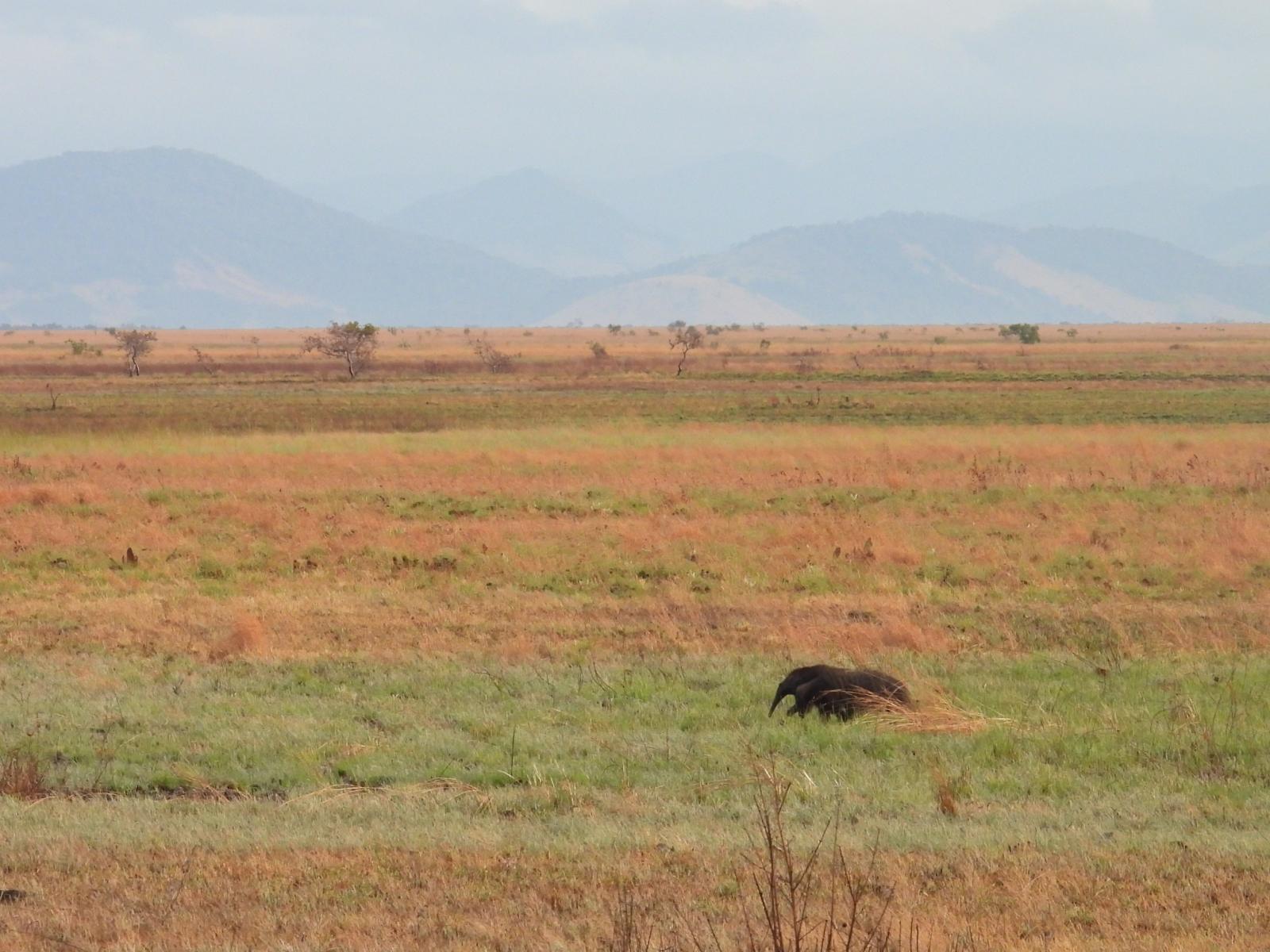
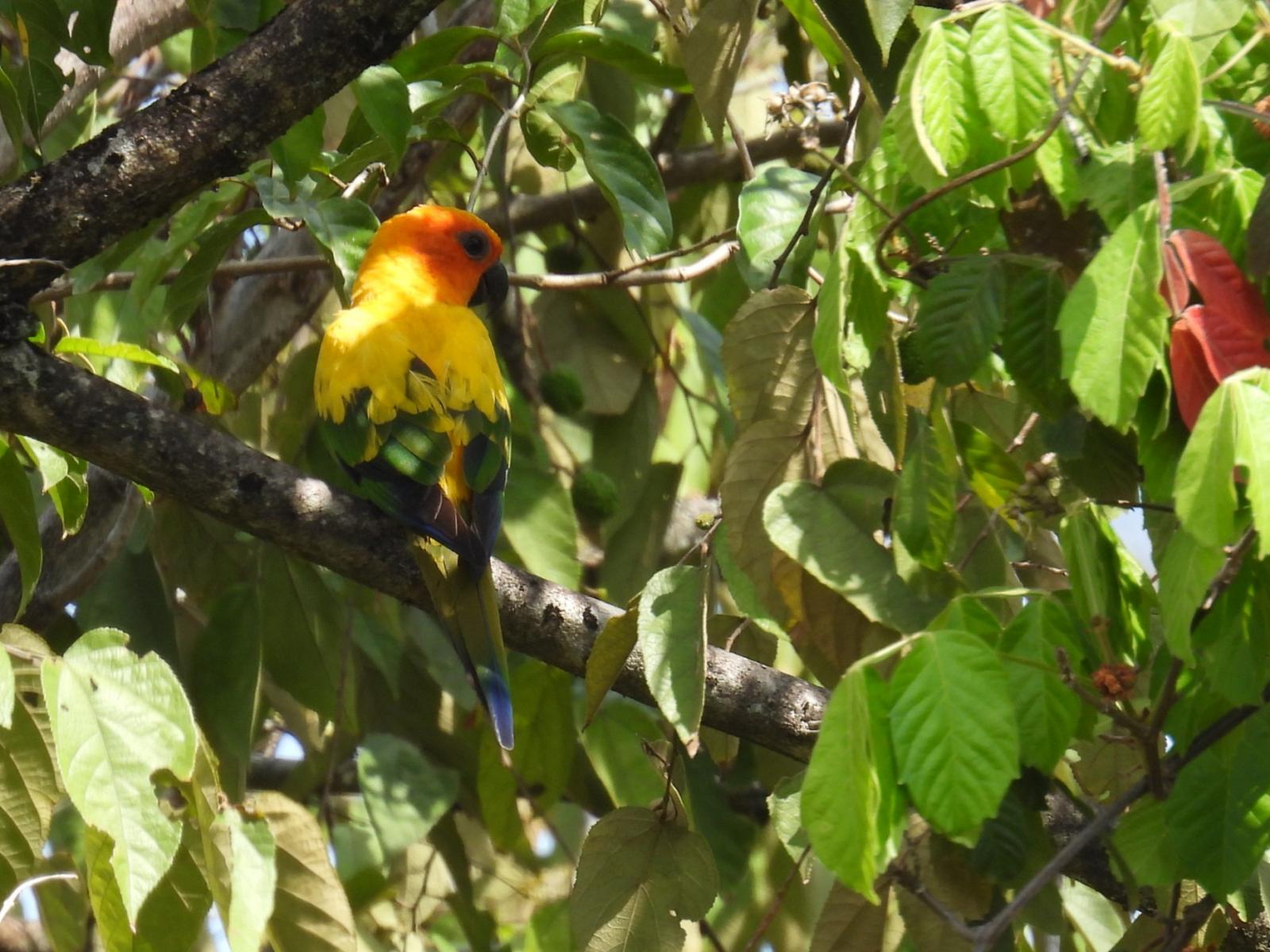
Day 10 - This morning we will continue our journey on to Karasabai village to see if we can locate one of our main targets; the endangered Sun Parakeet. We will leave Rock View early with a packed breakfast. This journey is expected to take us through some very interesting habitats; the low Pakarima mountain range, gallery forest and several ponds along the way. We may see birds including, Aplomado Falcon as they hunt over expansive plains with Grassland Yellow-Finches mixed with a variety of seedeaters, including Gray, Plumbeous, Chestnut-bellied, Ruddy-breasted and Lined seedeaters. We also have good chances of encountering Giant Anteaters as well.
In addition, we may see a variety of waterbirds such as Jabiru, Wood, and Maguari stork. Raptors including Savanna and White-tailed hawks along with Lesser Yellow-headed and King vultures. Before reaching Karasabai, we will make a stop at well-known pond to see if we can locate the Crested Doradito and the Bearded Tachuri.
Upon arrival, we will take time to visit some of the locals in order to secure official permission to bird the area. There are very few visitors here and we wish to ensure good relations and encourage ongoing conservation efforts, especially when considering that these people ultimately control the fate of the endangered Sun Parakeet.
This riparian forest along the border of Brazil where we will be birding during the morning offers some very interesting birding opportunities. Our primary target species will be the Sun Parakeet, but we will also have chances to observe many other birds, including Red-and-Green Macaw, Green-rumped Parrotlet, Black-and-White Hawk-Eagle, Zone-tailed Hawk, Rufous-browed Peppershrike, Toco Toucan and Ferruginous Pygmy-Owl, to name but a few.
Following lunch in the village, we will bird our way back to Manari Ranch, which is located just 15 minutes outside the town of Lethem near the Brazilian border. Upon arrival we will settle into our accommodation. Later that afternoon, if there is time, we will do some birding around the gardens at Manari. We will settle into our very simple but comfortable accommodation for the night.
Overnight at Manari Ranch.
Day 11 - Today we have a very early start in two 4x4s in search of the highly endangered Red Siskin. A fairly large population of Red Siskin was discovered in this region in 2003, far removed from any previously known colony, and we stand a good chance of observing this strikingly colored species with an estimate world population of 600-6000 pairs. Our main objective will be to focus on locating the siskin as this is our only chance. Luckily, local rangers from the Sand Creek village will have up-to-date information on where to find them although they are still not guaranteed! The drive to this site takes about 2.5hrs, but we will spend the drive back birding as we go.
While our main focus will be on the Red Siskin there are other birds that we try to find including Pale bellied Tyrant-Manakin, White-barred Piculet, Bicolored Hawk, Flavescent Warbler, White-bellied Antbird, Southern White-fringed Antwren, Crested Bobwhite and many more.
After our mornings birding, hopefully with the siskin in the proverbial bag, we will return in the village for Lunch. If we missed the siskin in the morning we will continue trying in the afternoon. Otherwise, we will bird our way back to Manari looking for species such as Brazilian Teal, Point-tailed Palmcreeper and White-throated Kingbird.
Overnight at Manari Ranch.
Day 12 - Today will be our final day in the Rupununi. Our focus for the morning will be on two birds with exceedingly restricted ranges, the Hoary-throated Spinetail (endangered) and the Rio Branco Antbird (near-threatened). Both species are only found in gallery forest along the Rio Branco River and other main tributaries, all of which ultimately flow into the Amazon. Recent agricultural pressures have seriously reduced the amount of available habitat for these birds. There is good news surrounding the fate of both species though as the South Rupununi Conservation Society received funding from National Geographic in 2021, which would be use to carry out several bird surveys and research within the gallery forest along the Ireng river and surroundings.
In order to reach suitable habitat for these birds, we will travel via 4×4 through the open Savannah. Along the way we might come across Maguari and Jabiru storks, Black-Collared Hawk, Rufous-tailed Jacamar, Black-chinned Antbird, Orange-backed Troupial and other species before reaching our site along a comparatively short stretch near the Ireng River. We will specifically target the Hoary-throated Spinetail and the Rio Branco Antbird in this area, although other interesting species may include Pale-legged Hornero, Double-striped Thick-knee, Golden-spangled Piculet, Little Woodpecker, Flavescent Warbler, Nacunda Nighthawk and more. The entire morning will be spent birding in this area. After our time here, we will return to Lethem from where we will catch our flight back to Georgetown.
Once we arrive in Georgetown, we will be transferred to your hotel. We will spend our final night in Guyana and celebrate your journey and experiences of this beautiful country!
Overnight at Manari Ranch.
Day 13 - The tour ends today, with transfers to the airport available to connect you with your international flight back home.