Day 0 (pre tour) -Jan. 21: Arrive in the Northeastern coastal city of Fortaleza where you will be met by a member of our local ground team to transfer you to the hotel.
Night in Fortaleza.
Day 1 – Jan. 22: The tour will kick off with an early morning transfer to Sobral (+/-3.5hrs [240km]) where we will spend the rest of the day birding. En route, we may make a stop at some coastal mangroves for the endemic Little Wood-rail if our timing permits. Here we could also spot some migrant shorebirds, Bicolored Conebill and perhaps Mangrove Rail.
There are a few special birds around the dry scrub and forests of Sobral, chief among them are the hefty Moustached Woodcreeper, the diminutive Hooded Gnateater and if we are up for some night birding, the lovely caramel-colored Buff-fronted Owl.
Birding will be split between three main areas. Dry Cerrado scrub/forest habitat for the Moustached Woodcreeper, the Meruoca Hills where we will target the Hooded Gnateater, Pectoral Sparrow, Gray-headed Spinetail and others and lastly, timer permitting, the aquatic habitats near the Acarau River right near the city for a variety of rallids including Spotted Rail, Rufous-sided, Gray-breasted and Yellow-breasted crakes. With luck we will be able to lay eyes on at least a couple of these.
Other species of the arid habitats we will likely encounter include White-bellied Nothura, Crested and Green-backed becards, Ochraceous Piculet, Silver-cheeked Antbird, Black-crowned and Black-bellied antwrens, Scarlet-throated Tanager, White-throated Seedeater and we shall also have an outside chance of encountering the rare Ash-throated Casiornis.
Night in Sobral.
Day 2 – Jan 23: We will spend a few hours birding around Sobral before driving on to Guaramiranga (+/-3.5hrs [230Km]) to bird the latter part of the afternoon.
Located 100km from Fortaleza, the isolated range of Maciço de Baturité has a remarkable humid forest ranging from 600-1100 meters altitude. This forest is an island of humid habitat in the middle of the dry Caatinga vegetation, that is predominant in the lower foothill elevation range (below 600 meters). Because of its unique habitat, this is the main refuge for several species in the state of Ceará. We will be birding near to town in private properties with good trails and/or roads.
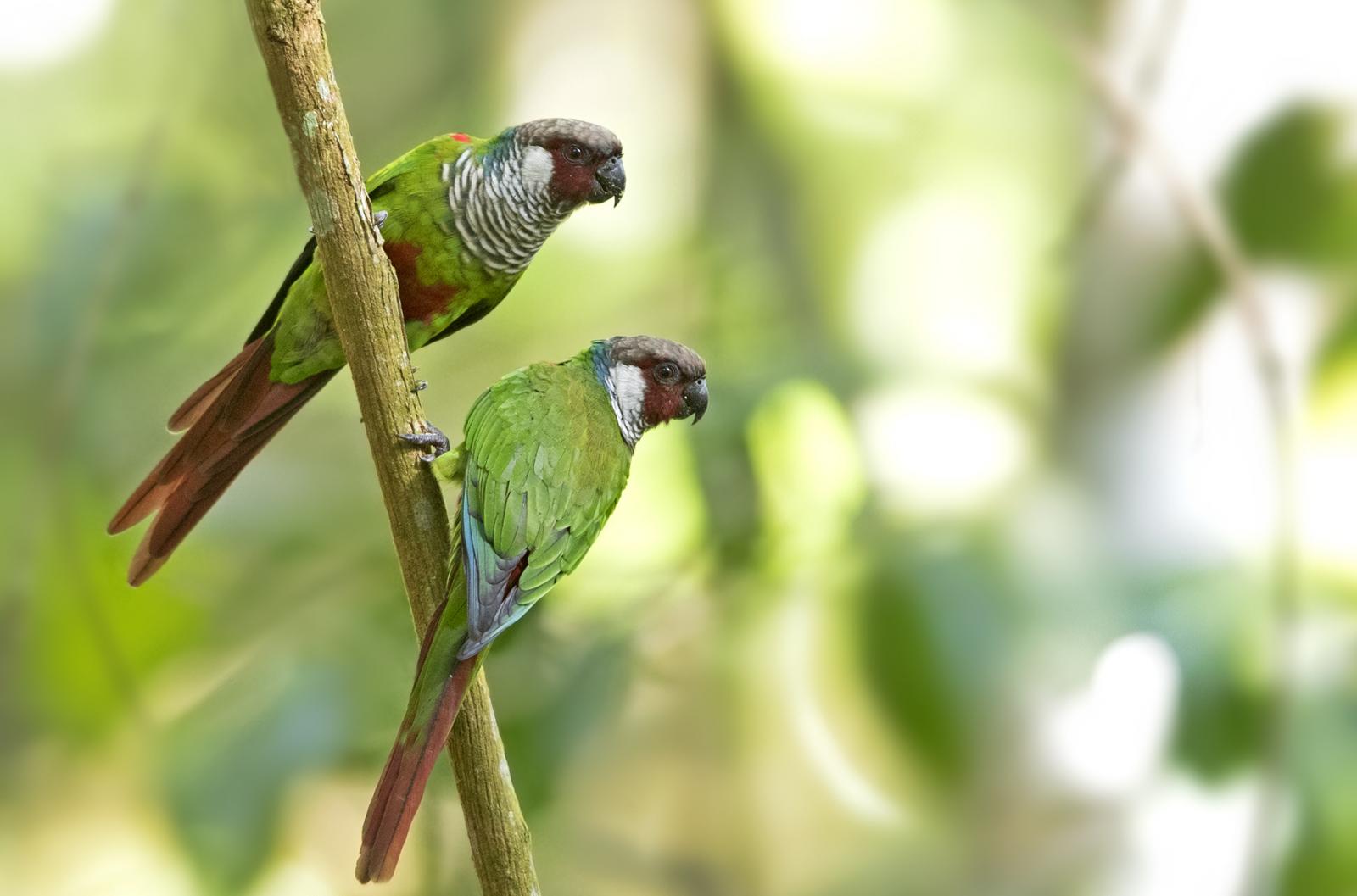
Perhaps the principal attraction of the area is the endemic Grey-breasted Parakeet. Once one of the world's most threatened parrots, they now represent a modern-day conservation success story. Other species of great interest are Buff-breasted Tody-Tyrant, Ceará Gnateater, Ceará Woodcreeper, Ochraceous Piculet, Guianan Tyrannulet, Band-tailed Manakin, Gould’s Toucanet and Gray-headed Spinetail. We will pay special attention to some subspecies that could possibly be elevated to full species in the future such the Ceara forms of Variable Antshrike, Red-necked Tanager and Rufous-breasted Leaftosser.
Night in Guaramiranga.
Day 3 – Jan. 24: We will have the full morning to spend birding in Guaramiranga before transferring to Quixadá (+/-2hrs [110Km]) for more afternoon birding. In addition to the above-mentioned birds, near Guaramiranga we may get lucky and spot the now very rare Yellow-faced Siskin.
One of the most striking features of Quixadá is the monolithic rock formations that take on various forms, breaking up the otherwise somewhat monotonous landscape of the countryside. The hotel we stay in is away from town and birding will be around the hotel grounds.
Here we begin to explore the unique Caatinga scrub habitat. A few birds worth highlighting are: White-naped Jay, Cactus Parakeet, Pygmy Nightjar (roosting in the garden!), Black-bellied Antwren, Pale Baywing, the Caatinga form of Long-billed Wren, Caatinga Cacholote, Ochre-backed Woodpecker and, one of the stars of this site, the rare and endemic White-browed Guan. During the dry season, a flock usually comes to drink in a reservoir in the hotel area.
Night at Quixada.
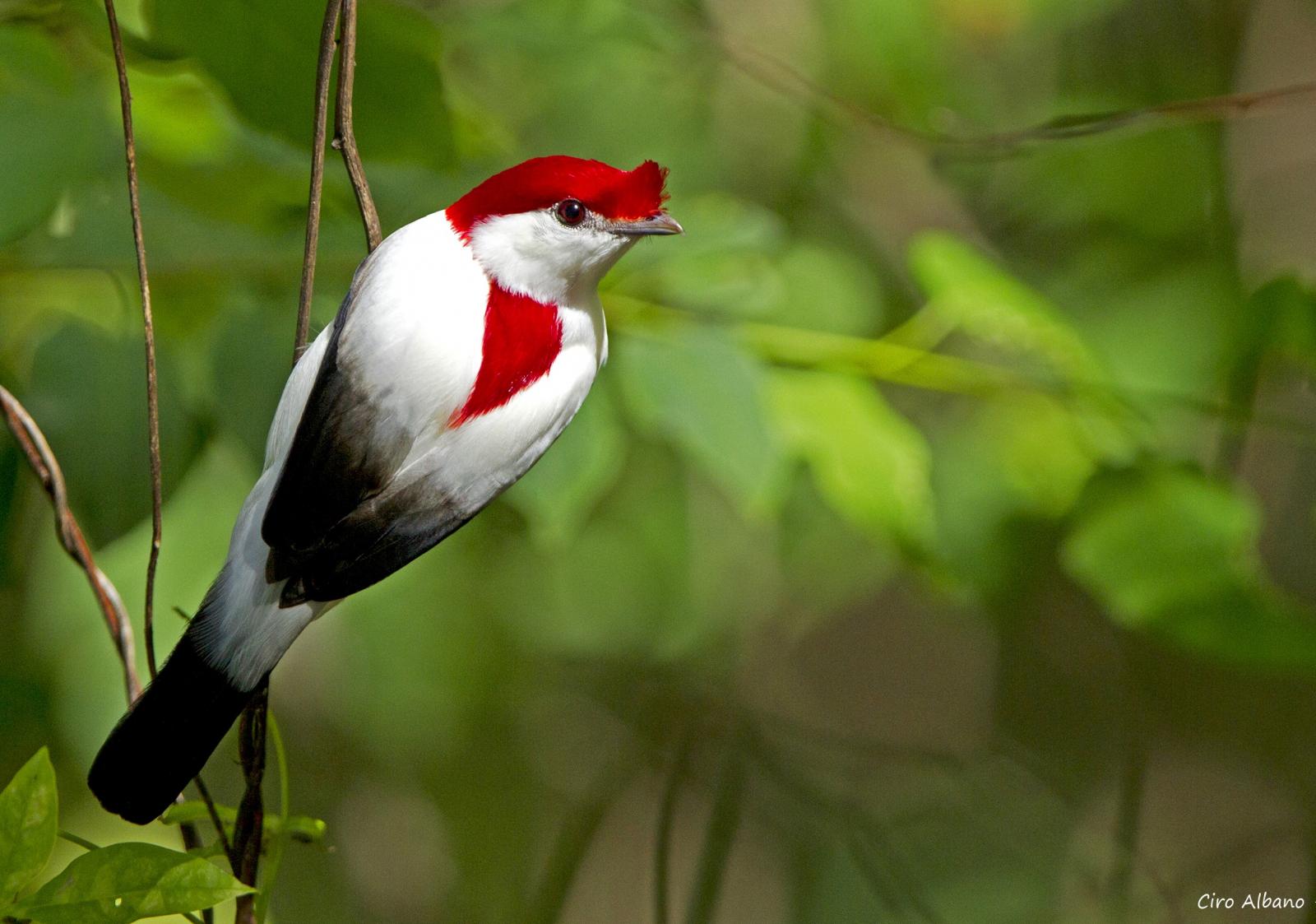
Day 4 – Jan. 25: This will be a day with quite a bit of driving so after breakfast and perhaps a small amount of birding in Quixadá, we will begin our journey to the foothills of the Chapada do Araripe plateau (Barbalha) (+/- 5.5hrs [340 km]), a place you cannot miss out on as it is the only area in the world for the superb Araripe Manakin! The Chapada do Araripe rises from the middle of the dry lowlands, forming a natural boundary between the states of Pernambuco, Piauí and Ceará. The northeastern portion of the Chapada faces the state of Ceará and concentrates hundreds of springs, forming a true oasis in the Caatinga. The Araripe Manakin was described to science in 1998 and to this day it stands out as one of the greatest “recent” discoveries in Ornithology. The species has an estimated distribution of just 30km²; exclusively ing the humid forests along the Ceará side of the Chapada slope; it is therefore classified as Critically Endangered. It is the target of conservation projects led by the Ceará NGO AQUASIS, which, in partnership with government agencies, and national and international NGOs, has been working to prevent the extinction of this beautiful bird.
After enjoying the Araripe Manakin, we will transfer to Potengi (+/-2hrs [105Km]) where if we have time, will spend the rest of the afternoon birding at the Sítio Pau Preto property. At dusk we will have a chance of seeing Least Nighthawks flying over the lodge.
Night in Potengi.
Day 5 – Jan 26: Potengi is a small town in the south region of Ceará, part of the Chapada do Araripe area. Only recently has Potengi entered the world birding scene because of a passionate birdwatcher and biologist that transformed his family property into a refuge for Caatinga birds, the “Sítio Pau Preto”. We will stay in a small, family-owned lodge where we can feel right at home hosted by him and his kind family. We will bird the vicinity in search of some of the most special birds in this unique habitat. For those who enjoy taking photos, there are also feeders.
On the property we will can find Caatinga specialties, such as White-browed Antpitta, Caatinga Antwren, White-throated Seedeater, Scarlet-throated Tanager, Great Xenops, Red-shouldered Spinetail, the local forms of Lesser [Bahia] Wagtail-Tyrant, Greater [Caatinga] Wagtail-Tyrant and Stripe-backed Antbird. We won’t forget the feeders, where we could see Campo Troupial, Red-cowled Cardinal, White-naped Jay, Grey Pileated Finch and more.
After a pleasant few hours of birding the Sitio Pau Preto, by late morning we will begin our transfer to Canudos, in the state of Bahia, stopping for lunch en route (+/-6.5hrs [470 km]). If we get there in time, we could try to see the Blue-winged Macaws coming to their roosting site or we could explore the Caatinga areas near town, searching for any birds we might have missed on the previous days.
Night in Canudos.
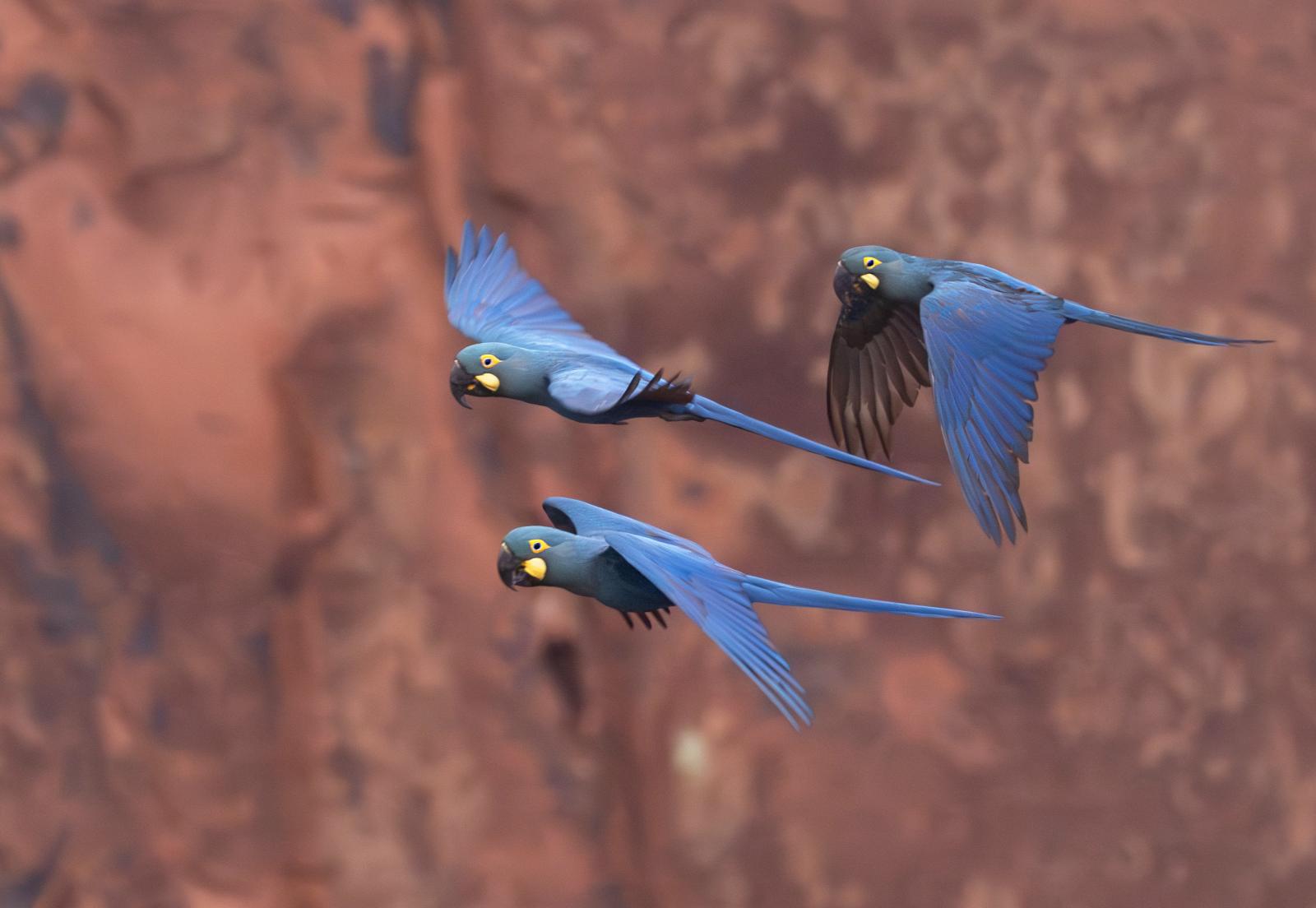
Day 6 – Jan. 27: Situated in the northern portion of the state of Bahia, near the borders with Pernambuco, Sergipe, and Alagoas, Canudos has some of the most extraordinary scenery of this trip. This morning promises to be one of the most exciting moments of the tour, as we will encounter the stunning Indigo Macaws! This amazing species only occurs in this region, the northern portion of Bahia. Hearing the macaws calling and seeing them perched on the cactus or flying past against the backdrop of the red sand cliffs, contrasting with the indigo blue of their plumage, is simply unforgettable.
Besides our main target, a few other species that we will keep an eye out for are the endemic form of Blue-crowned Parakeet, King Vulture, Black-chested Buzzard-Eagle and more.
After our special birding experience this morning, we will have another long drive ahead of us as we make our way to the Chapada Diamantina where we will stay in the cozy town of Lençóis (+/-8.5hrs [560Km]) for the next two nights. We will likely make at least one strategic birding stop along the way for the highly restricted endemic Pectoral Antwren.
Night in Lençóis.
Day 7 – Jan. 28: On this full day in the Chapada Diamantina area we will concentrate our efforts on the locations closer to Lençóis. The morning will be spent birding the Campo Rupestre trail about half an hour from the hotel while the afternoon we’ll be in humid forest (Cerradão with Atlantic Forest influence) in the surroundings of the town.
Without a doubt, one of the most impressive places in Brazil the landscapes here are astonishing. Chapada Diamantina is part of a long series of highlands linked to the Espinhaço Mountain range, which extends from the north of Minas Gerais through Bahia. There is a high diversity of habitats such as Caatinga, Cerrado, Campo Rupestre (arid mountain shrubs), Humid and Gallery Forests, and a correspondingly high diversity of birds (almost 400 species). Most of these beautiful landscapes and pristine habitats are part of the Chapada Diamantina National Park which protects 152,000 hectares. Because of the scenic views, preserved habitat, and waterfalls, this is one of the most visited places in the state of Bahia by tourists looking to connect with nature.
Our main targets in the Chapada Diamantina are the lovely Hooded Visorbearer, the rare Sincora Antwren and Diamantina Tapaculo, the last two described to science as recently as 2007. We have a long list of birds to look for besides the three mentioned above such as East Brazilian Chachalaca, Broad-tipped Hermit, Rufous Nightjar, Surucua [Orange-bellied] Trogon, Rufous-winged Antshrike, Collared Crescentchest, Rufous-sided Scrub Tyrant, Grey-backed Tachuri, Pale-bellied Tyrant-Manakin, Helmeted Manakin, São Francisco Sparrow, Copper Seedeater, Green-winged Saltator, Black-throated Saltator, Gilt-edged and White-banded tanagers, Serra Finch, Blue Finch and more. In case we have missed any Caatinga birds, we could also look for them here.
Night in Lençóis.
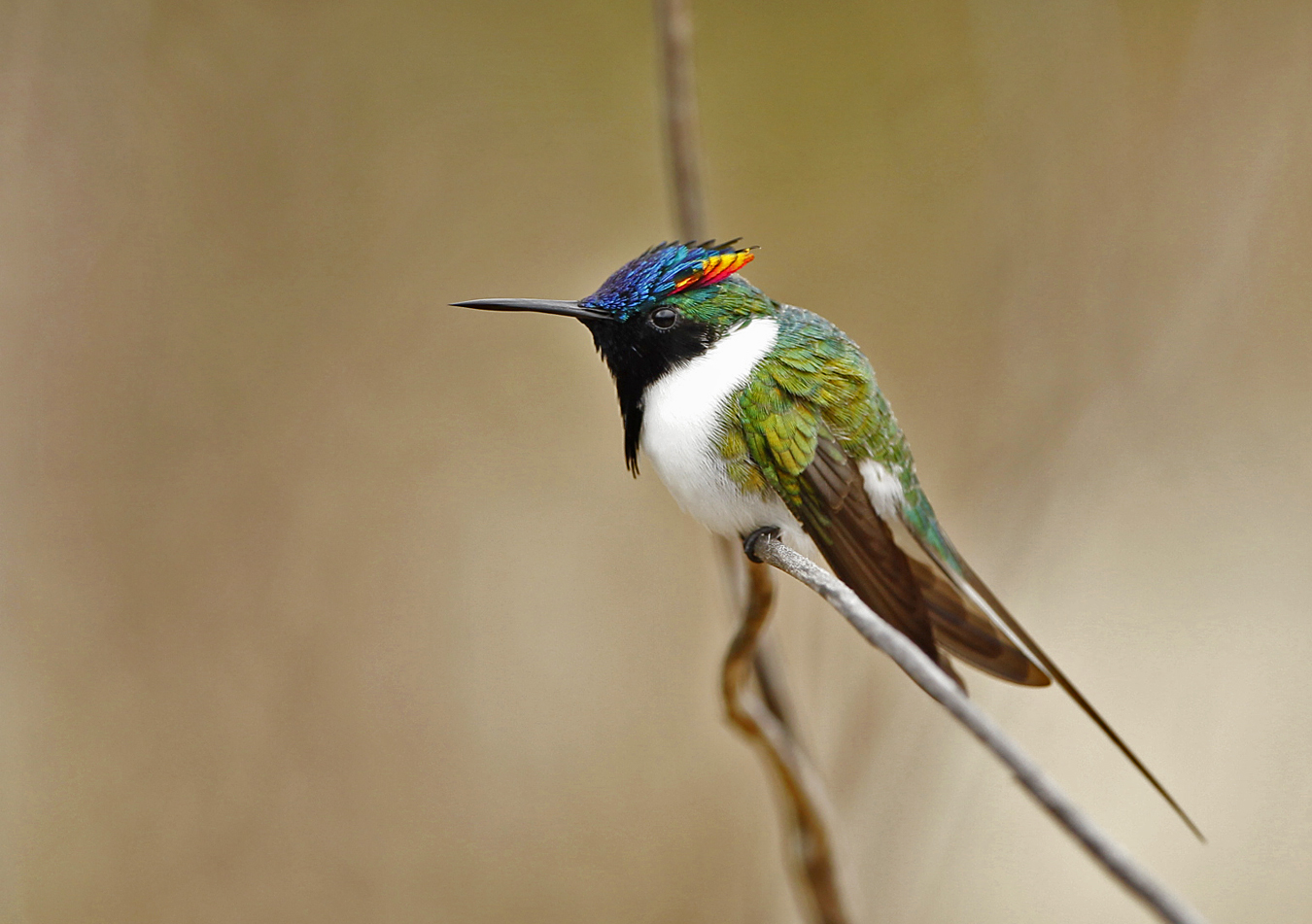
Day 8 – Jan. 29: Another morning of birding the area around Lençóis to search for any of the many targets we may still be without and then transfer to Mucugê (another part of the Chapada Diamantina) on a dirt road (+/-4hrs [130Km]). After our arrival, we will spend the remainder of the day birding before our night in Mucugê. One of the main targets around Mucugê is another brilliant hummingbird, the Horned Sungem. The area will also give us another shot some difficult endemics including Diamantina Tapaculo, Gray-backed Tachuri, Narrow-billed Antwren and Sao Francisco Sparrow.
Night in Mucugê.
Day 9 – Jan. 30: After breakfast, we will do a short amount of birding for any of the targets we may be yet missing before taking our leave towards Boa Nova (+/-6hrs [420Km]). We will, of course, make some stops for birding during the morning in Caatinga and Cerrado habitats of Chapada Diamantina to pick off remaining target species. One of these may be to look for the very localized Minas Gerais Tyrannulet.
Night in Boa Nova.
Days 10 and 11 - Jan. 31-Feb.1: These will be two full days of birding in the Boa Nova area. Located in the Southwestern part of Bahia, Boa Nova is famous among birders due to its highly diverse bird community (+430 species), with typical elements of montane Atlantic Forest, Caatinga, and a unique transitional area between the two known as “mata-de-cipó” (Vine Forest). This variety of habitats provides a rich avifauna, with many globally threatened species that motivated the Brazilian Government to create a mosaic of Protected Areas in the region including the National Park and Wildlife Refuge of Boa Nova, with 13.000 and 15.000 hectares, respectively.
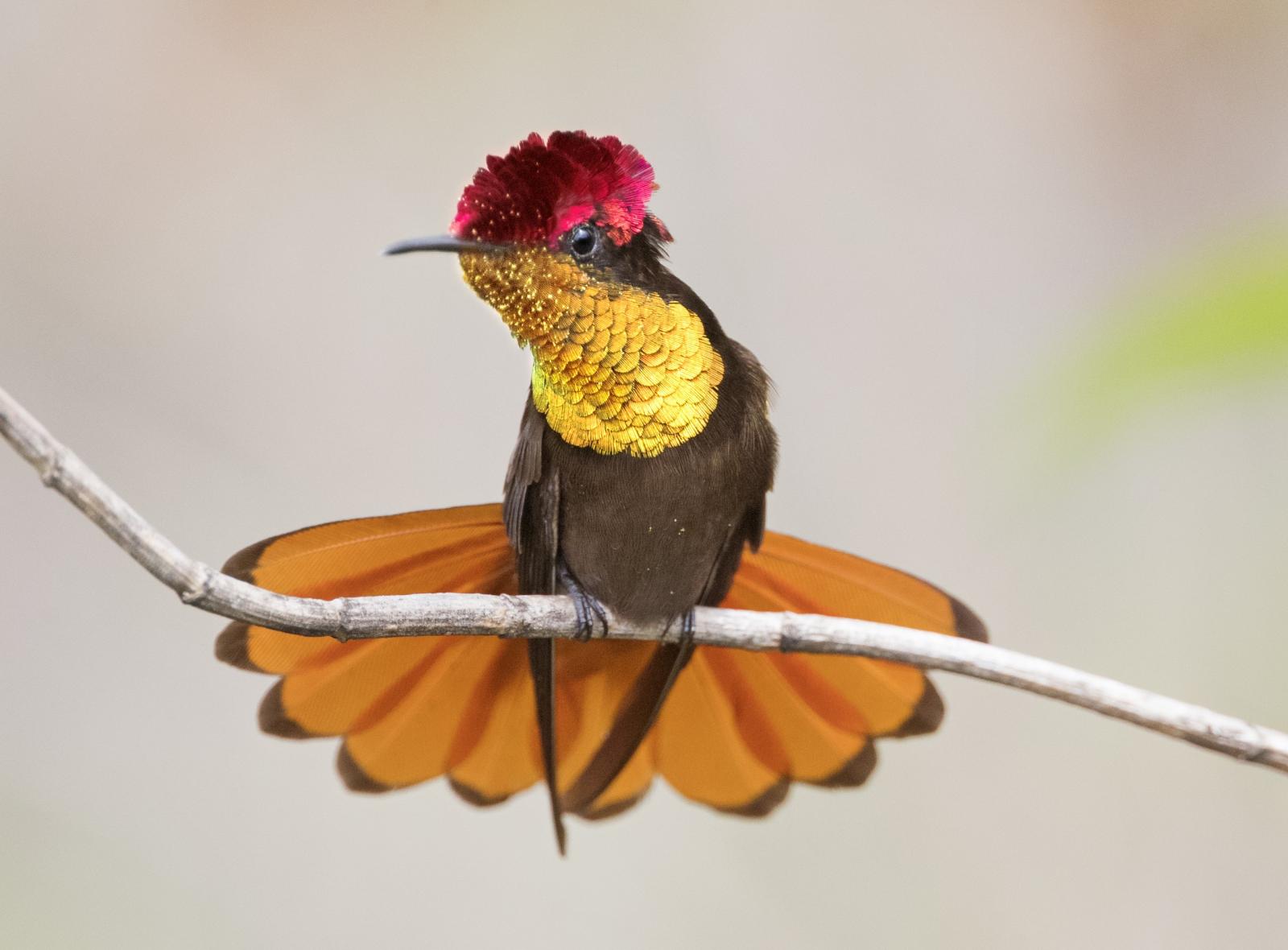
There is a natural hummingbird garden called Lajedo dos Beija-flores near the hotel (20min drive), full of ground cacti (Melocactus bahiensis) that blossom every afternoon attracting many nice hummingbirds. These include Sapphire-spangled Emerald, Swallow-tailed Hummingbird, Planalto Hermit, Stripe-breasted Starthroat and the stunning Ruby-Topaz Hummingbird.
Fortunately, this pristine and unique area is now owned and protected by a Brazilian couple of birders who are constantly improving facilities (hides and bird feeders), especially for bird photographers. Although there are no species that only occur in this area, you will have excellent photo opportunities of hummers, caatinga birds, and more. So, if you are a keen bird photographer or like to enjoy a special scenario you will love the famous “Lajedo dos Beija-flores”.
In the neighboring municipality (POÇÕES), there is a young birder (Mateus) who has found some of the rarer specialties of this region such as the local Wied’s Tyrant-Manakin, White-bibbed Antbird, Greenish Schiffornis, Scaled Woodcreeper, Swallow-tailed Manakin and others that we will hope to see. It is important to mention that some areas in Poções are not reachable by van if it rains.
One of the main highlights around Boa Nova is the Slender Antbird, confined to the “mata-de-cipó” vegetation where we could also find the Narrow-billed Antwren and Hangnest Tody-Tyrant. In the Montane Atlantic Forest we will search for species such as the Scale-throated Hermit, Least Pygmy Owl, Crescent-chested Puffbird, Black-billed Scythebill, White-eyed Foliage-gleaner, Striated Softtail, Pallid Spinetail, Bahia Spinetail, the scarce Rio de Janeiro Antbird, Ferruginous Antbird, Spot-breasted Antvireo, Fork-tailed Pygmy-Tyrant, Grey-hooded Attila, Pin-tailed Manakin, Rufous-headed Tanager, Gilt-edged Tanager and many others. Here, we will also have chances of seeing the fantastic Giant Snipe.
Two more nights in Boa Nova.
Day 12 – Feb. 2: Depending on how the birding went the previous two days we may do a bit of morning birding on Day 12 before our transfer to Ilheus (+/-5hrs [300Km]) where we will bird the rest of the day. En route we will likely do a bit of birding near Itororo for Yellow-legged Tinamou, Scalloped Antbird and Pink-legged Graveitero. The scarce endemic Minute Hermit may be possible as well.
Night in Ilheus.
Days 13 and 14 – Feb. 3-4: Our first morning in the coastal Atlantic Rainforest region will be around Ilheus where we will look for Pink-legged Graveitero, White-winged Cotinga, the rare Banded Cotinga (which will require a healthy dose of luck to encounter) and other species typical of this ecoregion. En route to Itacaré we may stop off at a mangrove site for Little Wood-rail if we didn’t try for it on Day 1.
The Itacaré region of South Coast Bahia is rich in endemism and special birds so we will dedicate 2 full days to birding the area. There are various protected areas, such as the Serra do Conduru State Park, within this vast area of remnants of lowland forest. Itacaré itself is a famous touristic destination with marvelous forest, beaches, and waterfalls. From here we will do an excursion to Maraú (north) to try to see the rare and endemic Bahia Tapaculo. We will also explore the Serra do Conduru State Park, south of Itacaré. This State Park protects more than 9,000 hectares of Atlantic Forest and it is one of the most biodiverse areas of this biome, with 458 different tree species per hectare with a high index of endemism. This reflects on the avifauna as well; a paradise within which to see manakins and many other interesting birds.
Among the wealth of great birds that call this area of lowland Atlantic Forest home are Great-billed [Margaretta's] Hermit, Brown-backed Parrotlet, Kinglet Manakin, White-crowned Manakin, Blue-backed Manakin, Red-headed Manakin, Scaled Antbird, Black-cheeked Gnateater, Band-tailed Antwren, Cinereous-breasted Spinetail, White-winged Cotinga, White-bellied Tanager, Opal-rumped [Silvery-breasted] Tanager, the nominate race of White-fronted Nunbird and many others. If we are lucky, we may encounter Racket-tipped Thorntail, Ochre-marked Parakeet or the stunning Banded Cotinga.
Two nights in Itacaré.
Day 15 – Feb. 5: After a short morning birding session, we will begin our last longer drive of the tour, up the coast to Praia do Forte (+/-6hr [340km]).
Our principal birding focus will be on the highly localized endemic Fringe-backed Fire-eye though we will also be on the lookout for another rare antbird the Bahia Antwren. As our last stop on the tour, it will also provide opportunities to enjoy further some of the commoner species we will have become familiar with including Peach-fronted and Golden-capped Parakeets, Spot-backed Puffbird, Spotted Piculet, Rufous Hornero, Caatinga Cacholote and Cinnamon Tanager among many others.
Night in Praia do Forte.
Day 16 – Feb. 6: Our final morning of the tour will be spent birding the Praia do Forte area for the above mentioned species before we depart to Salvador (+/-2hr [60km]) where the tour will end. If we didn’t get it earlier in the tour, we may have a chance to look for the lovely Blue Finch as well as further chances to view the stunning Horned Sungem on our way to Salvador.
Participants can book their flights home from Salvador as of this evening or we can arrange a hotel for the night (additional cost).
End Tour in Salvador.